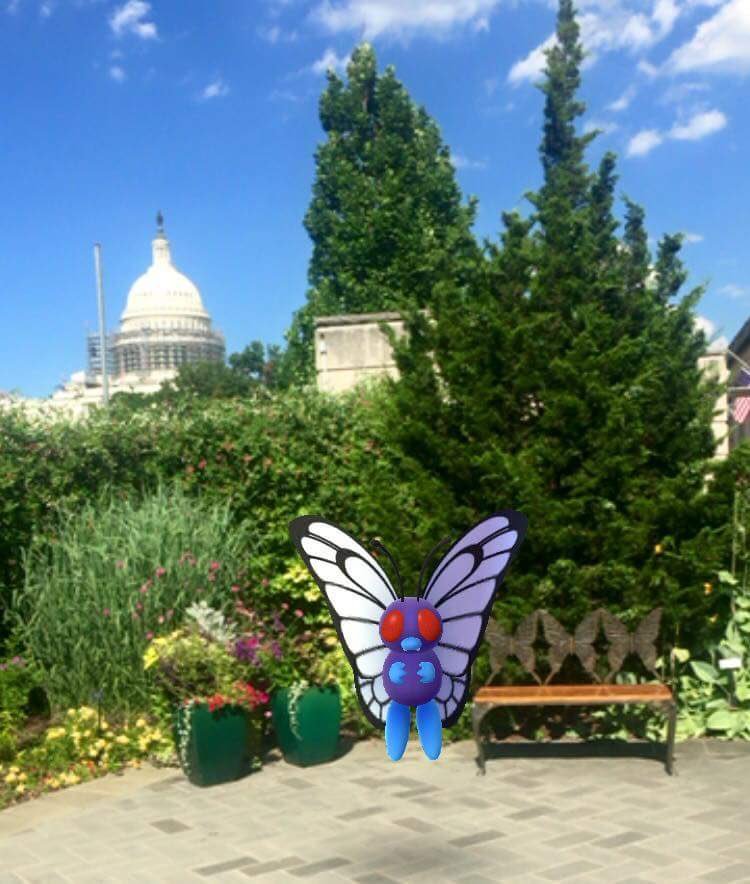
The insatiable quest sweeping the nation in the wake of the release of Pokémon Go has federal agencies pondering whether the hot new game is a boon or burden.
With an estimated 7.5 million downloads, the Niantic Labs-designed game has cast scores of smartphone safari hunters out into the streets in search of Manifest Pokémon.
The game, which uses augmented reality to allow players to travel to real locations to capture or battle the digital creatures from their smartphones, has designated certain landmarks as so-called PokéStops and Pokémon Gyms.
For federal agencies with tourism and education at the heart of their mission, the emergence of the game has presented something of a bounty of attention that merited a measured welcome.
“Like with everybody, it came out of the blue,” said Kathy Kupper, spokeswoman for the National Park Service. “The first day, [we] just noticed people coming more and tending to look at their phones.”
The National Mall and U.S. Capitol, in particular, have become hot spots for Pokémon hunting, so much so that Kupper said that park rangers have begun incorporating game information into some of their tours.
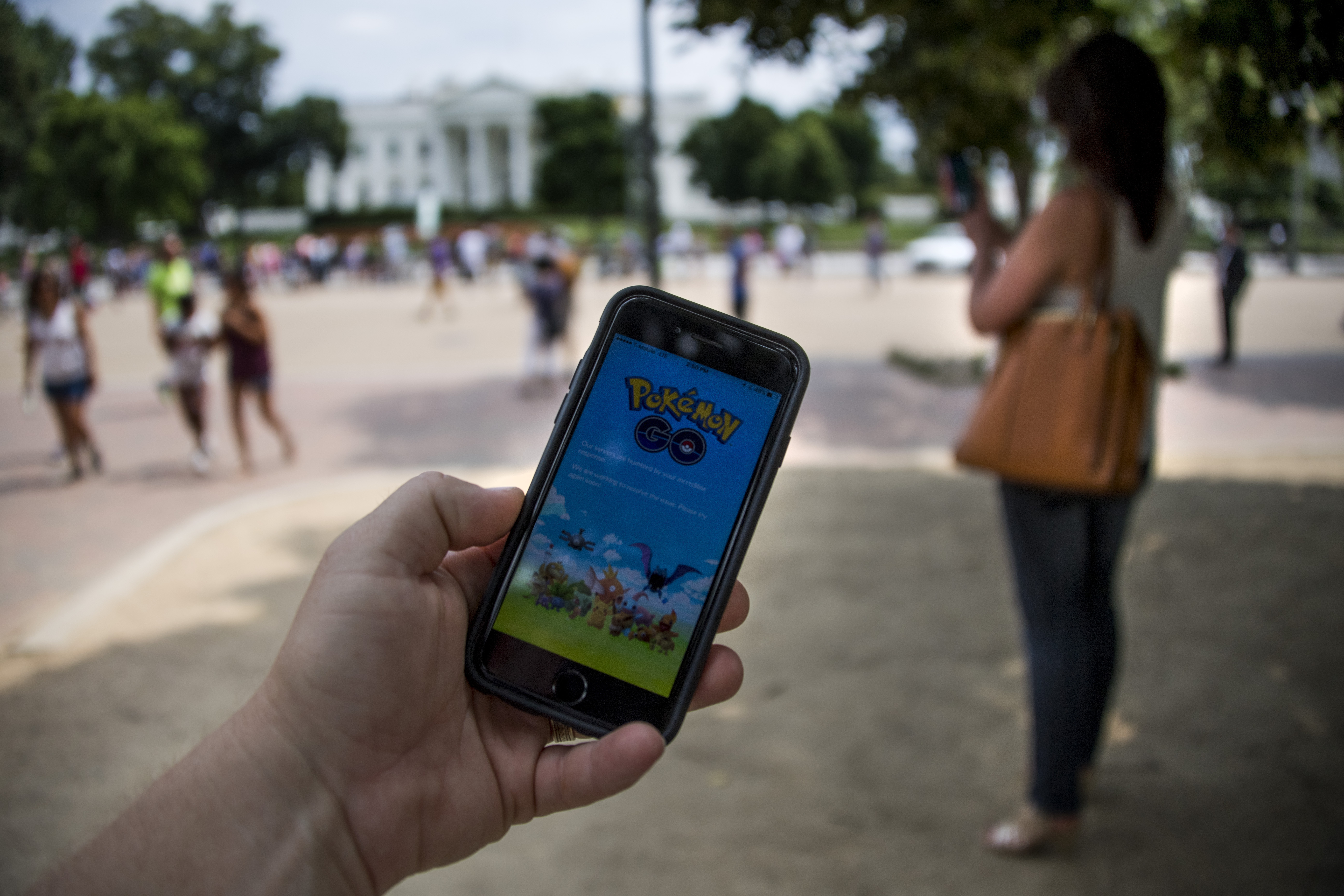
“There are a couple of rangers there that were kind of right on the cutting edge of the game and embraced it right away,” she said. “They started doing social media posts and developed a walking tour, so the rangers that were familiar with Pokémon had a leg up on it and started almost the first day.”
Officially the National Park Service does not endorse specific games or products, but can comment on them when they affect the parks, which Pokémon Go has certainly done.
Certain landmarks around the DC area have unknowingly become PokéStops, but may not want the notoriety that goes along with the designation.
The U.S. Holocaust Museum and Arlington National Cemetery both requested this week that patrons refrain from playing the game on their grounds.
Niantic and The Pokémon Company International also released a joint statement explaining how the PokéStops are designated.
“PokéStops and Gyms in Pokémon GO are found at publicly accessible places such as historical markers, public art installations, museums and monuments. If you want to report inappropriate locations or content, please submit a ticket on the Pokémon GO Support website at https://support.pokemongo.nianticlabs.com/hc/en-us.”
Kupper said that for the moment, the NPS is only asking patrons to avoid playing the game in a way that impacts other patrons, affects their safety or at monuments where the game’s use shows a lack of decorum.
“Obviously, there’s certain sites like the World War II Memorial, the Vietnam Veterans Memorial, and the Korean War Memorial where we ask people to maintain their composure and respect for the sites,” Kupper said.
She added that the individual parks have a degree of autonomy with how they decide to embrace and manage the game on their grounds, but overall its popularity has brought a new emphasis to national sites that the NPS is welcoming.
“There’s a lot of parks that are lesser known that are part of this, and their visitation is going,” Kupper said. “They are having hundreds of visitors that would normally not come to the site in a given day. Some parks are beginning to develop programming.
“Basically, the idea is amplify the people who are coming to the park, to help them, while they are there, learn a little bit more about the resource.”