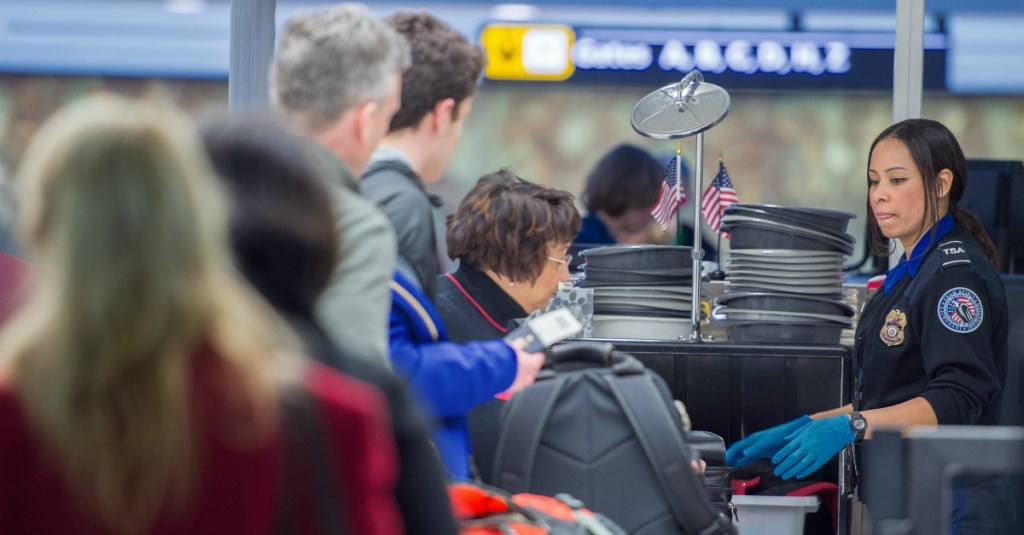
The Transportation Security Administration is getting serious about developing and deploying self-screening systems at airport security checkpoints.
TSA released a draft statement of work and an accompanying request for information Jan. 6 seeking industry feedback as the agency looks to continue its work with the DHS Science and Technology Directorate to develop the self-screening capability.
TSA is holding an industry day on self-screening checkpoints Feb. 12. Industry can submit questions until Feb. 5.
“Development of personal self-service screening stations would allow for a reimagining of traditional checkpoint layouts and could result in increased overall passenger screening throughput capability,” TSA officials wrote in the draft statement of work.
The officials want to know what technical or scheduling shortfalls are in the RFI, as well as cost and the type of technologies industry could provide to help create the system.
This is a new development in TSA’s quest for a self-screening capability. Last November, TSA released a similar RFI as the agency considered whether to move forward with the project.
The new RFI says that information collected after the November RFI is being used to determine whether to release a broad agency announcement.
The performance period in the draft statement of work is 54 months. The base period is eight months with three options of 14 months, 12 months and 20 months.
TSA wrote that it wants the machines to operate like “self-checkout at grocery stores, self-tagging checked baggage, or ATM machines.” The plan is to deploy the self-screening system in the TSA Pre-check area.